Rental Vacancy Reduction Strategies That Actually Work
Discover effective rental vacancy reduction strategies to minimize costs and maximize profit. Learn practical tips to fill vacancies faster.
Rental Vacancy Reduction Strategies That Actually Work

Every vacant unit costs you money you cannot recover. Vacancy causes significant lost rent, which compounds quickly across a portfolio when factoring in turnover costs like cleaning, repairs, and re-marketing. Across a portfolio with normal annual turnover, that math compounds fast.
The good news: vacancy is largely within your control. The rental vacancy reduction strategies that move the needle most are not about luck or market timing. They come down to pricing discipline, response speed, property condition, and the systems you use to manage all three. Here is what works.
The most effective rental vacancy reduction strategies at a glance
Apply these tactics and you will cut vacancy days across your portfolio:
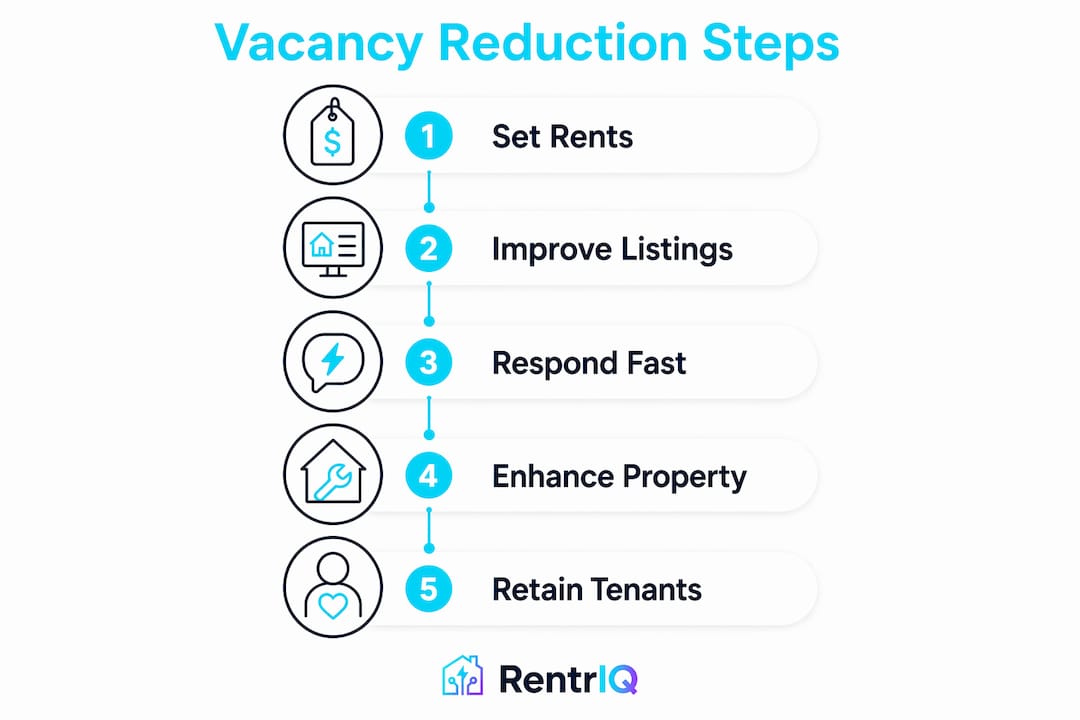
- Price competitively from day one. Overpricing is the leading cause of extended vacancy. Set rent based on current comparable listings, not what you want to earn.
- Pre-lease before the unit is empty. Start marketing 2–3 weeks before a tenant moves out. You should have an approved applicant before turnover work is even complete.
- Respond to inquiries within minutes. Speed is the single biggest leasing conversion lever. Automate your first response so no lead goes cold overnight.
- Streamline showings with self-scheduling. Let prospects pick their own time slot. Every day of back-and-forth scheduling adds to your vacancy count.
- Keep the unit rent-ready. A clean, well-maintained property leases faster and attracts tenants who take better care of it.
- Retain good tenants proactively. A renewal incentive costing a few hundred dollars saves thousands in turnover costs.
- Use a property management platform. Tools like Rentriq integrate screening, lease signing, maintenance tracking, and rent collection in one place, removing the friction that slows every step of the leasing cycle.
How to measure vacancy rates and track the metrics that matter
You cannot fix what you do not measure. Vacancy rate is the foundational metric: divide the number of vacant units by total units, then multiply by 100. A rate under 6–7% is generally considered healthy for most U.S. markets, though urban high-demand areas often run lower and rural or high-supply markets can run higher.
Beyond the headline rate, track these:
- Days on market (DOM): How long from listing to signed lease. This is your clearest signal of pricing and marketing effectiveness.
- Turnover costs per event: Include lost rent, cleaning, repairs, and re-marketing. Industry averages run $2,500–$4,000 per turnover event.
- Renewal rate: The percentage of tenants who renew at lease end. A low renewal rate is a warning sign before vacancy even appears.
- Fill time: Days from move-out to new tenant move-in. Pre-leasing compresses this directly.
Benchmark your numbers against local market averages, not national ones. A 10-day fill time in a tight urban market is fine; in a slower suburban market it may signal a pricing or marketing problem. Review these metrics monthly, not quarterly, so you catch trends early.
How to set competitive rents that fill units without leaving money behind
Overpricing is the most common and most costly mistake landlords make. The instinct to start high and negotiate down backfires consistently: fewer inquiries arrive, days on market stretch out, and price reductions become necessary anyway, often after the best prospects have already moved on.
The first one to two weeks on market are when your listing gets the most organic visibility. Use that window by researching active comparable rentals in your area, not closed leases from six months ago. Zillow, Apartments.com, and Realtor.com all show current asking rents by zip code and unit type.
Pro Tip: Price 2–3% below market during slow seasons (typically november through february in most U.S. markets). You recover that small discount in reduced vacancy days far faster than you would by holding out for a higher rent.
A few additional pricing levers worth using:
- Flexible lease terms at a premium. A six-month lease at $100/month more, or month-to-month at $150–$200/month more, lets you capture short-term renters while protecting your income.
- Lease expiration staggering. If all your leases expire in winter, you are turning units in the worst rental season. Offer 14- or 18-month initial terms to shift expirations toward spring and summer, when demand peaks.
- Mid-month move-ins. Prorate rent for the partial month rather than making a tenant wait until the first. Sixteen days of unnecessary vacancy costs more than the prorated adjustment.
Use Rentriq’s vacancy intelligence tool to pull local market data and set rents based on real-time comparable activity rather than gut feel.
What makes a rental listing actually convert prospects into applicants
Most landlords underinvest in listing quality and overpay for it in vacancy days. Listings with professional photos receive 118% more views, and virtual tours attract 87% more inquiries than listings with phone photos. A professional photographer costs $150–$250 per unit and the photos are reusable for two to three years. If better photos reduce your vacancy by even five days on a $1,800/month unit, that is $300 saved on a $200 investment.

Beyond photography, your listing description needs to do more than list features. Help prospective tenants picture their life in the space. Mention natural light, proximity to transit or employment centers, recent upgrades like in-unit laundry, and any pet-friendly policies. Specific details outperform generic copy every time.
Multi-platform syndication multiplies your reach without multiplying your work. Distribute your listing across Zillow, Apartments.com, Realtor.com, Facebook Marketplace, and any local rental platforms relevant to your market. The critical discipline: keep pricing, availability, and unit details consistent across every platform. Discrepancies erode trust and create confusion before a prospect ever contacts you.
Why lead response speed is your biggest vacancy lever
Speed matters more than most landlords realize. Prospective tenants typically reach out to several properties at once, and the landlord who responds first tends to win the best applicants. A slow response, even by a few hours, can cost you a well-qualified tenant who has already signed elsewhere by morning.

Automation solves this. An AI-powered inquiry response system can answer unit-specific questions, collect prospect information, and move a lead forward at 9:30 PM on a Saturday without any staff involvement. By the time you check your dashboard in the morning, you have a qualified, scheduled lead waiting.
Pre-qualification before the showing matters just as much. 93.3% of property managers encountered application fraud, with falsified pay stubs as the most common type. Filtering out unqualified prospects before you invest time in a showing protects both your schedule and your screening budget.
Self-scheduling removes the final friction point. Pre-leasing a unit 2–3 weeks before a tenant moves out can cut turnover vacancy by 14 or more days per event. Combine that with instant self-scheduling and you compress the entire leasing timeline significantly. Every back-and-forth email to coordinate a showing adds days to your vacancy count. Letting prospects pick their own slot eliminates that entirely.
How property condition and curb appeal affect how fast you lease
A clean, well-maintained, move-in-ready property builds confidence before a word is spoken. A unit that shows deferred maintenance creates hesitation, even when priced competitively. With rental vacancy rates rising in many U.S. regions, tenants have more choices, and condition is consistently one of the top factors influencing their decision.
Before listing any unit, work through this checklist:
- Complete all minor repairs: leaky faucets, sticking doors, burnt-out bulbs.
- Deep clean every room, including appliances, windows, and grout lines.
- Verify that HVAC, plumbing, and electrical systems are all functioning.
- Apply fresh paint or touch-ups where needed.
- Address the exterior and entryway so the first impression is strong.
Coordinating vendor work efficiently is just as important as doing it at all. Fragmented scheduling, where a painter comes one week and a cleaner the next, stretches your days-to-ready metric unnecessarily. Consolidate cleaning, paint, and minor repairs into a single 48-hour window when possible. A move-in-ready property does not just lease faster; it also tends to attract tenants who maintain it better throughout the lease.
Tenant screening and retention strategies that reduce long-term vacancy
The cheapest vacancy is the one that never happens. Retaining a good tenant for an extra year saves you the full cost of a turnover event, which runs $2,500–$4,000 in hard costs alone, before you count lost rent. Spending a few hundred dollars on retention incentives is one of the highest-return investments in property management.
Screening comes first. Verified tools like SmartMove and Checkr run comprehensive background and credit checks that reduce the risk of placing a tenant who will not pay, damage the unit, or leave early. Given that application fraud affects the vast majority of property managers, automated screening is not optional for anyone managing more than a handful of units. Learn more about building a reliable screening process in Rentriq’s complete tenant screening guide.
Once a good tenant is in place, keep them with a deliberate retention program:
- Annual unit refresh. During your annual inspection, ask what needs updating. A new faucet or touch-up paint costs $200–$300 and signals that you take the property seriously.
- Lease renewal incentive. Offer a small upgrade at renewal: new blinds, a ceiling fan, or cabinet hardware. The cost is $100–$300; the savings versus a full turnover are $4,000 or more.
- Proactive maintenance. Maintenance responsiveness drives nearly a third of tenant non-renewals. Resolve routine requests within 48 hours and acknowledge them within four hours. Sending a repair ETA and technician name after a ticket is submitted reduces resident anxiety and follow-up calls.
- Referral program. A $200–$300 referral credit for a tenant who brings in a qualified new renter fills units faster and costs less than most paid advertising.
- Flexible lease options. Offering a 14- or 18-month lease at renewal shifts expiration dates away from slow seasons and reduces the odds of a winter vacancy.
For a deeper look at how property management services support long-term tenant retention and leasing performance, that resource covers the operational side in detail.
How Rentriq helps you reduce vacancy across your entire portfolio
Rentriq is built specifically for property managers overseeing 10–200 units who need more than spreadsheets but do not need the cost or complexity of enterprise platforms. Every feature in the platform connects directly to a vacancy reduction lever.
- Tenant screening with SmartMove and Checkr. Run background checks, credit reports, and eviction history from inside the platform. Screening happens faster, fraud risk drops, and you place better tenants from the start.
- Digital lease signing. Leases get signed the same day an applicant is approved, not three days later when paper documents finally arrive. That compression alone saves vacancy days on every turn.
- Online rent collection via Stripe. Automated payment processing reduces delinquency-driven vacancy and keeps your cash flow predictable.
- Maintenance work order tracking. Assign, track, and close maintenance requests in one place. Faster resolution means fewer frustrated tenants and fewer non-renewals driven by neglected repairs.
- Vacancy intelligence. Rentriq’s vacancy analytics tools pull market data so you can price units competitively and spot occupancy trends before they become problems.
- Self-service tenant portal. Tenants pay rent, submit maintenance requests, and access lease documents without calling you. That convenience is a measurable factor in renewal intent.
The platform targets the gap between basic landlord apps and expensive enterprise software. If you are managing a growing portfolio and losing vacancy days to process friction, the right tool pays for itself quickly. See Rentriq’s current plan pricing to find the tier that fits your portfolio size.
Try Rentriq free and start reducing vacancy today
Rentriq brings together every tool you need to reduce vacancy: verified tenant screening through SmartMove and Checkr, digital lease signing, automated rent collection, maintenance tracking, and vacancy intelligence in one platform. Property managers overseeing 10–200 units use it to cut turnover time, place better tenants, and keep them longer.
Start for free at Rentriq and see how much vacancy time you can recover across your portfolio.
Key Takeaways
Consistent vacancy reduction comes down to pricing accuracy, response speed, property condition, and tenant retention working together, not any single tactic in isolation.
| Point | Details |
|---|---|
| Vacancy has a daily price tag | Each vacant unit costs approximately $57 per day in lost rent, totaling nearly $1,200 over an average three-week vacancy period. |
| Overpricing extends vacancy | Setting rent above market drives away qualified applicants during the critical first two weeks on market. |
| Pre-leasing cuts turnover time | Marketing a unit 2–3 weeks before move-out can reduce vacancy by 14 or more days per event. |
| Retention beats replacement | Turnover costs $2,500–$4,000 per event; a renewal incentive costing a few hundred dollars saves thousands in turnover costs. |
| Screening reduces fraud risk | 93.3% of property managers encounter application fraud; tools like SmartMove and Checkr reduce that risk substantially. |
Recommended
Manage your rentals with RentrIQ
Free with unlimited units. Tenant screening, online rent collection, maintenance tracking, and more.
Start Free