How to Write a Residential Lease Agreement: 12 Clauses Every Landlord Needs
The essential elements of a residential lease agreement — from rent terms and security deposits to entry notice and pet policies. Written in plain English.
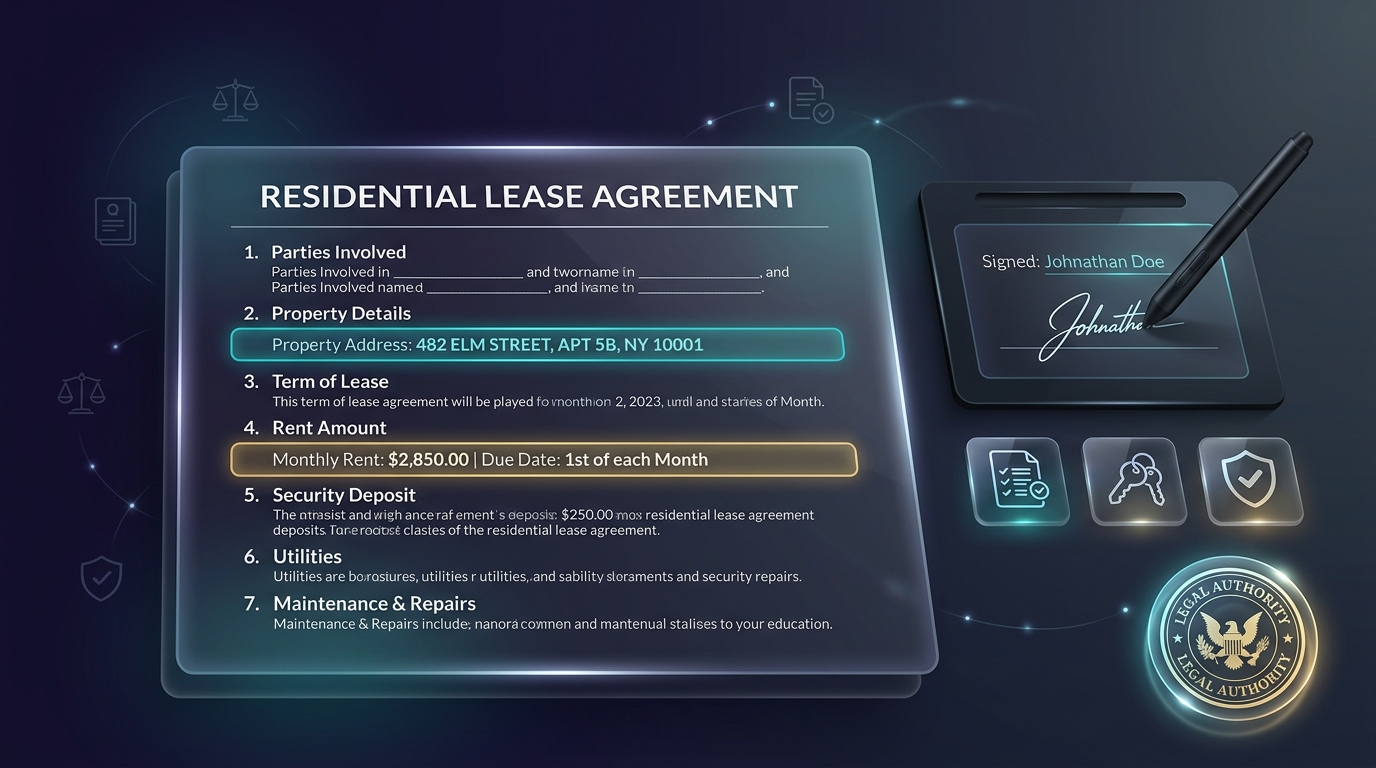
A lease agreement is the legal foundation of your landlord-tenant relationship. It defines expectations, protects you legally, and gives both parties a clear reference point if anything goes sideways. A weak or missing lease is one of the most expensive mistakes a landlord can make. Here are the 12 clauses every residential lease needs.
1. Parties and Property Description
Start with the basics: full legal names of all tenants (every adult who will live there must sign), the landlord's name and address for notices, and the complete property address including unit number. If the property is owned by an LLC, the LLC is the landlord — not you personally. This matters for legal and tax purposes.
2. Lease Term
Specify exact start and end dates. "One year" is not specific enough — write "June 1, 2026 through May 31, 2027." State what happens at the end: does it convert to month-to-month automatically, or must the tenant vacate? If month-to-month, specify the notice period required to terminate (typically 30 days, though some states require 60).
3. Rent Amount, Due Date, and Accepted Payment Methods
State the exact monthly rent amount, the due date (typically the 1st), and which payment methods are accepted. Be specific: "ACH bank transfer via the RentrIQ tenant portal, certified check, or money order. Personal checks accepted for the first 3 months only." Vague language here creates arguments when a tenant tries to pay in an inconvenient way.
4. Late Fee Policy
Clearly state the grace period (how many days after the due date before a fee applies), the initial flat fee, and any per-day fee that accrues after that. Example: "Rent is due on the 1st. A grace period of 5 days applies. After the 5th day, a $75 late fee is charged. An additional $10 per day accrues from the 6th day until paid." Check your state's limits before drafting — see our state-by-state late fee guide.
5. Security Deposit
State the deposit amount, where it will be held (name of bank, whether interest-bearing), the timeline for return after move-out (varies by state: 14–45 days), and the specific conditions under which deductions can be made. Many landlords lose deposit disputes because they didn't document pre-existing damage at move-in. Always do a written inspection report signed by both parties.
6. Utilities Responsibility
List every utility — electric, gas, water, sewer, trash, internet, cable — and mark who pays for each. If utilities are included in rent, cap your exposure: "Landlord-paid utilities include water and trash, not to exceed $80/month. Usage above that threshold is billed to tenant." This protects you if a tenant runs the AC at 60 degrees all summer.
7. Maintenance and Repairs
Define tenant responsibilities (keep the unit clean, report issues promptly, replace light bulbs and batteries, maintain HVAC filters) versus landlord responsibilities (structural components, appliances provided at move-in, heating and plumbing). State the process for submitting maintenance requests and your target response time for routine vs emergency issues.
8. Landlord Entry Notice
Most states require 24–48 hours written notice before a landlord can enter the unit — except in emergencies. Put the exact requirement in the lease. Specify the hours entry may occur (typically 8am–8pm on weekdays), that you will provide notice by email or text, and that emergency entry (fire, flood, gas leak) requires no advance notice. Never skip this clause — unauthorized entry is a serious legal issue.
9. Pet Policy
Be explicit: no pets allowed, or specific pets allowed with conditions. If pets are permitted: allowed species and sizes, number of pets, pet deposit amount (one-time, non-refundable vs refundable), monthly pet rent (if any), and tenant's responsibility for pet-related damage. Note: emotional support animals are not "pets" under fair housing law and cannot be subject to pet fees or deposits — handle those requests through the proper accommodation process.
10. Guest Policy
Distinguish between guests and unauthorized occupants. A common standard: "Guests may stay for no more than 14 consecutive days or 30 total days in any 12-month period without written landlord approval. Guests who exceed this threshold are considered unauthorized occupants and may constitute a lease violation." This prevents a "guest" from quietly moving in without going through screening.
11. Lease Violations and Cure Period
State what constitutes a violation (noise complaints, unauthorized occupants, subletting without permission, failure to maintain unit) and the cure period — typically 3–10 days — before you can proceed with eviction. Many states mandate a specific cure period by law. Attempting to evict without following this process can result in your eviction case being dismissed.
12. Termination and Move-Out Procedures
Cover how the tenant gives notice to vacate (written, how many days), the move-out inspection process, how to return keys and fobs, how the tenant's forwarding address for deposit return should be provided, and what conditions the unit must be left in ("professional carpet cleaning required if pets were present," "all trash removed," "walls returned to original color").
Getting Signatures and Storing the Lease
Every adult tenant must sign. Use a digital signing platform to get timestamped e-signatures — RentrIQ integrates with DocuSeal so you can send leases for signing directly from the platform and have the executed document automatically stored in the tenant's file. Both you and the tenant receive a signed copy immediately.
One Final Note
A lease template is a starting point, not a final document. Have a local real estate attorney review your lease at least once — especially if you operate in a state with strong tenant protections (California, New York, New Jersey). A $300 attorney review can prevent a $10,000 mistake.
Manage your rentals with RentrIQ
Free with unlimited units. Tenant screening, online rent collection, maintenance tracking, and more.
Start Free