What Is a Good Cap Rate for Rental Property? (2026 Guide)
Cap rate explained: what it means, how to calculate it, and what counts as good in 2026. Covers property types, markets, and a free calculator.
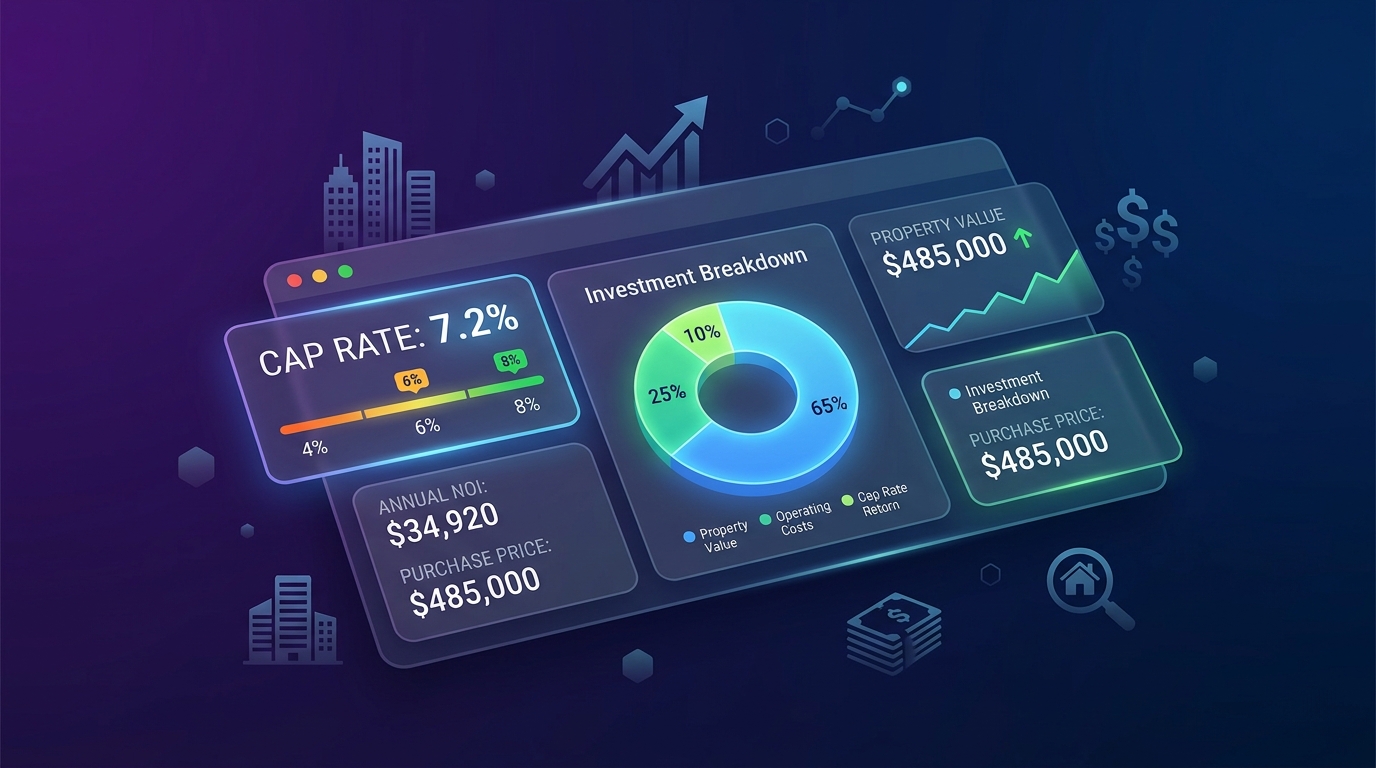
If you're analyzing a rental property investment, cap rate is one of the first numbers you'll see. But what does it actually mean, what's considered "good," and when should you ignore it entirely? This guide covers everything.
What Is Cap Rate?
Capitalization rate (cap rate) measures the annual return you'd earn on a property if you paid all cash — no mortgage. The formula is:
Cap Rate = Net Operating Income (NOI) ÷ Property Value × 100
Since cap rate depends directly on your NOI, it's critical to calculate NOI accurately before drawing any conclusions. For example: a property worth $400,000 that generates $28,000 in annual NOI has a cap rate of 7%.
How to Calculate Net Operating Income
NOI is your gross rental income minus operating expenses — but before mortgage payments, depreciation, and income taxes.
Operating expenses typically include:
- Property taxes
- Insurance
- Property management fees (typically 8–12% of gross rents)
- Maintenance and repairs (budget 1% of property value per year)
- Vacancy allowance (typically 5–8%)
- Utilities (if landlord-paid)
- HOA fees
A common mistake is calculating NOI using asking rent with no vacancy allowance and no maintenance budget. This produces an inflated cap rate that won't survive the first leaky roof.
What Is a Good Cap Rate in 2026?
There's no single answer — it depends on asset class, geography, and your risk tolerance. Here's a general framework:
- 4–5%: Primary markets (NYC, SF, LA). Lower cap rates reflect appreciation expectations and lower perceived risk. Typical for class A apartments.
- 5–7%: Secondary markets and suburban locations. The sweet spot for many investors balancing cash flow and appreciation.
- 7–10%: Tertiary markets or value-add properties. Higher cash flow but more management-intensive and higher vacancy risk.
- 10%+: High-risk assets — mobile home parks, rural properties, or deeply distressed properties. Requires significant due diligence.
As interest rates rose sharply from 2022–2024, cap rates in many markets expanded. In 2026, the spread between cap rates and the 10-year Treasury is normalizing — but compression is slower in secondary markets.
Cap Rate vs. Cash-on-Cash Return
Cap rate ignores financing. Cash-on-cash return (CoC) tells you what you actually earn on your down payment after debt service — and that's the number that matters for leveraged investors.
Example: Same $400,000 property, 25% down ($100,000), 7% cap rate:
- NOI: $28,000
- Annual mortgage payment (at 7% on $300,000, 30yr): ~$23,952
- Cash flow after debt: $4,048
- Cash-on-cash return: 4.0%
In this scenario, you'd earn more in a high-yield savings account. That's why many investors in today's rate environment target 8–9%+ cap rates to achieve meaningful cash-on-cash returns.
When Cap Rate Doesn't Matter
Cap rate is a snapshot. It doesn't account for:
- Appreciation: A 4% cap rate in a market appreciating 8% annually can still be an excellent investment.
- Value-add potential: A property with below-market rents might have a 5% cap rate today and a 9% cap rate after renovation.
- Tax benefits: Depreciation deductions can significantly improve after-tax returns.
- Financing terms: A seller-financed deal at 4% interest changes the math entirely.
Quick Cap Rate Calculator
Use our free cap rate calculator to calculate cap rate, NOI, and monthly cash flow for any property in under 60 seconds. Or try the full rental property cash flow calculator for 10-year equity projections.
The Bottom Line
A "good" cap rate in 2026 is one that meets your investment objectives given your local market conditions. For most individual landlords in mid-tier markets, targeting 6–8% cap rates gives reasonable cash flow without taking on excessive risk. Don't chase yield in markets you don't understand — a well-managed 5.5% cap rate property in a stable market will outperform a 9% cap rate property in a declining one.
Manage your rentals with RentrIQ
Free with unlimited units. Tenant screening, online rent collection, maintenance tracking, and more.
Start Free